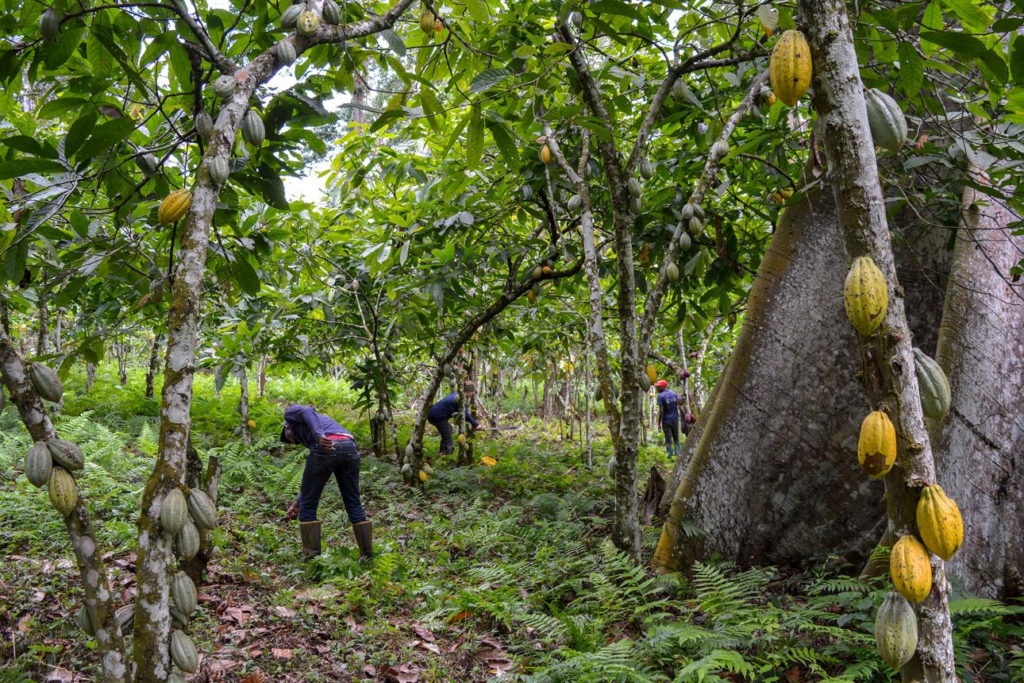
Agricultural Supply Chain Explained: From Farm To Consumer
Executive Summary
The Agricultural Supply Chain Guide provides a comprehensive framework for understanding how agricultural products move efficiently from farms to consumers through production, harvesting, storage, transportation, processing, distribution, and retail. Every stage of the supply chain influences product quality, food safety, operational efficiency, customer satisfaction, and business profitability. This guide introduces an Agricultural Supply Chain Management Framework that helps farmers, agribusinesses, processors, distributors, wholesalers, retailers, and investors identify opportunities to improve logistics, reduce waste, strengthen resilience, and create greater value throughout the agricultural value chain.
Direct Answer
An agricultural supply chain is the interconnected network of people, businesses, infrastructure, and processes involved in producing, storing, processing, transporting, distributing, marketing, and delivering agricultural products from farms to final consumers. Effective supply chain management improves product quality, minimizes losses, reduces costs, strengthens food safety, and increases profitability across every stage of agricultural production and distribution.
Core Topic Analysis: Why Agricultural Supply Chains Matter
A comprehensive Agricultural Supply Chain Guide begins with recognizing that successful agriculture extends beyond production. Even high-quality crops and livestock may lose value if products are poorly stored, delayed during transportation, damaged during handling, or distributed inefficiently.
Agricultural supply chains connect producers with processors, wholesalers, exporters, retailers, food manufacturers, restaurants, and consumers. Every participant contributes to creating value while ensuring agricultural products remain safe, marketable, and available when needed.
Modern agricultural supply chains have become increasingly sophisticated due to growing consumer expectations, international trade, food safety regulations, technological innovation, and changing market demands. Businesses that manage supply chains efficiently are often better positioned to reduce waste, improve customer satisfaction, strengthen profitability, and respond quickly to disruptions.
Rather than treating logistics as a separate business function, successful agricultural enterprises integrate production planning, inventory management, transportation, processing, marketing, and customer service into one coordinated operational system.
Efficient supply chains create value by delivering the right agricultural products to the right customers at the right time and in the right condition.
Supply chain management transforms agricultural production into a coordinated business system that maximizes quality, efficiency, and profitability.
Understanding the Agricultural Supply Chain
The agricultural supply chain consists of multiple interconnected stages that work together to move products from farms to end users.
| Supply Chain Stage | Primary Function | Business Value |
|---|---|---|
| Production | Grow crops or raise livestock | Creates agricultural products |
| Harvesting | Collect products at optimum maturity | Maintains quality |
| Storage | Protect products before sale or processing | Reduces post-harvest losses |
| Transportation | Move products through the supply chain | Supports market access |
| Processing | Add value through cleaning, grading, packaging, or manufacturing | Increases product value |
| Distribution & Retail | Deliver products to buyers and consumers | Generates revenue |
Each stage influences product quality, operational costs, customer satisfaction, and overall business profitability.
The Agricultural Value Chain
Although often used interchangeably, the supply chain and value chain have different focuses.
- Supply chain management emphasizes the efficient movement of products through production, storage, transportation, processing, and distribution.
- Value chain management focuses on increasing the value of agricultural products through quality improvements, branding, processing, certification, packaging, and customer service.
Businesses that strengthen both logistics efficiency and value creation generally achieve stronger competitive advantages.
Key Participants in Agricultural Supply Chains
Agricultural supply chains involve numerous organizations working together to move products efficiently.
- Farmers and producers.
- Input suppliers.
- Storage operators.
- Transport providers.
- Processors.
- Wholesalers.
- Exporters and importers.
- Retailers.
- Food service businesses.
- Final consumers.
Strong communication and coordination among these participants improve operational efficiency while reducing delays and unnecessary costs.
Agricultural Supply Chain Management Framework
| Management Stage | Key Question | Desired Outcome |
|---|---|---|
| Production Planning | Can production meet market demand? | Efficient farm operations |
| Inventory Management | How should products be stored? | Reduced post-harvest losses |
| Logistics Planning | How will products move efficiently? | Reliable transportation |
| Processing & Value Addition | Can product value be increased? | Higher profitability |
| Distribution | How will products reach customers? | Reliable market access |
| Performance Improvement | Where can efficiency improve? | Continuous optimization |
This framework helps agricultural businesses coordinate every stage of the supply chain while improving productivity, customer service, and financial performance.

Storage and Inventory Management
Storage plays a critical role in preserving agricultural product quality between harvest and final sale. Effective inventory management reduces post-harvest losses, maintains food safety, supports price optimization, and improves supply chain efficiency.
Storage strategies should consider:
- Temperature and humidity control.
- Ventilation requirements.
- Pest prevention.
- Stock rotation using first-in, first-out (FIFO) principles where appropriate.
- Inventory tracking systems.
- Product traceability.
- Warehouse sanitation and maintenance.
Proper storage allows businesses to maintain product quality while improving marketing flexibility and reducing unnecessary waste.
Every percentage of post-harvest loss prevented strengthens profitability without increasing production.
Transportation and Logistics
Transportation connects every stage of the agricultural supply chain. Reliable logistics ensure products arrive safely, efficiently, and in marketable condition while minimizing delays and spoilage.
Transportation planning should evaluate:
- Road, rail, air, or sea transportation options.
- Cold chain requirements for perishable products.
- Delivery scheduling.
- Loading and unloading procedures.
- Packaging protection.
- Fuel and operating costs.
- Route optimization.
- Shipment tracking technologies.
Efficient transportation lowers operating costs while improving customer satisfaction through reliable deliveries.
Efficient logistics preserve product quality while reducing operating costs throughout the agricultural supply chain.
Value Addition Through Processing
Processing increases the commercial value of agricultural products by improving quality, extending shelf life, enhancing convenience, or creating entirely new products.
Examples of value-added processing include:
- Cleaning and grading.
- Sorting and packaging.
- Milling grains.
- Pasteurizing dairy products.
- Freezing fruits and vegetables.
- Oil extraction.
- Juice production.
- Food manufacturing.
Value-added processing often improves profit margins while expanding market opportunities beyond raw commodity sales.
Distribution and Market Access
Distribution systems ensure agricultural products reach wholesalers, retailers, food processors, exporters, restaurants, and consumers efficiently.
| Distribution Channel | Typical Customers | Primary Advantage |
|---|---|---|
| Wholesale Markets | Retailers and distributors | Large sales volumes |
| Food Processors | Manufacturing companies | Long-term supply contracts |
| Retail Stores | Consumers | Direct market access |
| Export Markets | International buyers | Expanded customer base |
| Food Service | Restaurants and institutions | Consistent commercial demand |
| Direct-to-Consumer | Individual customers | Higher potential margins |
Selecting appropriate distribution channels depends on product characteristics, production scale, customer requirements, logistics capabilities, and business objectives.
Technology in Agricultural Supply Chains
Digital technologies increasingly improve supply chain visibility, efficiency, and decision-making.
Modern supply chain technologies include:
- GPS fleet tracking.
- Warehouse management systems.
- Inventory management software.
- Blockchain traceability platforms.
- Radio Frequency Identification (RFID).
- Internet of Things (IoT) sensors.
- Cold chain monitoring systems.
- Supply chain analytics platforms.
Technology helps businesses improve inventory accuracy, reduce delays, strengthen traceability, and optimize logistics performance.
Agricultural Supply Chain Performance Checklist
| Assessment Area | Key Question | Desired Outcome |
|---|---|---|
| Production Planning | Does production align with market demand? | Balanced supply |
| Storage | Are post-harvest losses minimized? | Improved product quality |
| Transportation | Are deliveries timely and efficient? | Reliable logistics |
| Processing | Can additional value be created? | Higher profitability |
| Distribution | Are products reaching target customers effectively? | Efficient market access |
| Technology | Are digital systems improving visibility? | Data-driven operations |
Common Agricultural Supply Chain Mistakes
Even productive farms can lose profitability through inefficient supply chain management. Common mistakes include:
- Neglecting post-harvest handling procedures.
- Using inadequate storage facilities.
- Poor inventory management leading to spoilage.
- Inefficient transportation planning.
- Failing to coordinate production with market demand.
- Limited communication between supply chain partners.
- Ignoring opportunities for value-added processing.
- Underutilizing technology for logistics and traceability.
Strong supply chain management requires continuous coordination across production, storage, transportation, processing, and distribution. Businesses that monitor performance at every stage are generally better positioned to reduce waste, improve efficiency, and increase long-term profitability.
Agricultural Intelligence Insights
One of the most important principles in the Agricultural Supply Chain Guide is that efficiency is created by optimizing the entire supply chain rather than improving individual stages independently. A highly productive farm can still experience significant financial losses if storage is inadequate, transportation is delayed, inventory is poorly managed, or products fail to reach buyers in optimal condition.
Another key insight is that agricultural supply chains create value at every stage. Harvesting at the correct maturity, protecting product quality during storage, maintaining cold chain integrity, selecting efficient transportation routes, applying value-added processing, and delivering products reliably all contribute to increased customer satisfaction and stronger business profitability.
Supply chain resilience has become increasingly important as agriculture faces climate variability, transportation disruptions, labor shortages, input price volatility, and changing consumer demand. Businesses that diversify suppliers, strengthen logistics partnerships, maintain contingency plans, and use real-time supply chain data are generally better prepared to manage unexpected disruptions.
Digital technologies continue transforming agricultural logistics. Cloud-based inventory systems, GPS fleet management, warehouse automation, blockchain traceability, predictive analytics, artificial intelligence, and Internet of Things (IoT) sensors provide greater visibility across the entire supply chain while supporting faster and more informed operational decisions.
Efficient agricultural supply chains maximize value by coordinating every stage from production through final delivery.
Reducing waste throughout the supply chain often increases profitability more effectively than increasing production alone.
Supply chain resilience depends on continuous planning, collaboration, technology adoption, and operational flexibility.
Practical Agricultural Supply Chain Scenarios
Scenario 1: Improving Fresh Produce Distribution
A vegetable producer experiences significant post-harvest losses because harvested crops remain unrefrigerated before transportation. By investing in cold storage, scheduling faster deliveries, and implementing inventory tracking, product quality improves, spoilage decreases, and customer satisfaction increases, resulting in stronger profitability.
Scenario 2: Grain Storage Optimization
A grain cooperative installs improved storage monitoring systems that track moisture, temperature, and inventory levels. Better storage management reduces spoilage, preserves grain quality, and allows members to sell during more favorable market conditions rather than immediately after harvest.
Scenario 3: Digital Supply Chain Integration
An agribusiness integrates production planning, warehouse management, transportation scheduling, and customer orders into a centralized digital platform. Real-time inventory visibility, automated logistics coordination, and improved communication reduce delays while increasing operational efficiency across multiple distribution centers.
Action Checklist: Agricultural Supply Chain Optimization
- Align production planning with expected market demand.
- Implement proper post-harvest handling procedures to preserve product quality.
- Invest in appropriate storage facilities and inventory management systems.
- Optimize transportation routes and delivery schedules.
- Evaluate opportunities for value-added processing.
- Strengthen communication among farmers, processors, distributors, and customers.
- Implement traceability systems that improve food safety and transparency.
- Adopt digital technologies that improve logistics visibility and operational decision-making.
- Develop contingency plans for supply chain disruptions.
- Review supply chain performance regularly and continuously improve operational efficiency.
Frequently Asked Questions
What is an agricultural supply chain?
An agricultural supply chain is the network of people, businesses, infrastructure, and processes involved in producing, storing, processing, transporting, distributing, and delivering agricultural products from farms to final consumers.
Why is supply chain management important in agriculture?
Effective supply chain management reduces waste, preserves product quality, improves food safety, lowers operating costs, strengthens customer satisfaction, and increases overall business profitability.
What is the difference between a supply chain and a value chain?
A supply chain focuses on efficiently moving products from producers to consumers, while a value chain emphasizes increasing product value through quality improvements, processing, branding, packaging, and customer service.
How can farmers reduce post-harvest losses?
Farmers can reduce losses through proper harvesting techniques, improved storage, temperature management, careful transportation, inventory monitoring, and timely marketing.
How does technology improve agricultural supply chains?
Technology improves inventory tracking, transportation management, traceability, warehouse operations, demand forecasting, and communication among supply chain participants, increasing efficiency and reducing waste.
What is cold chain management?
Cold chain management maintains temperature-controlled storage and transportation for perishable agricultural products to preserve quality, safety, and shelf life throughout the supply chain.
How can agricultural businesses improve supply chain resilience?
Businesses strengthen resilience by diversifying suppliers, improving logistics planning, maintaining contingency plans, investing in technology, strengthening communication, and continuously monitoring supply chain performance.
Conclusion
The Agricultural Supply Chain Guide demonstrates that successful agriculture extends far beyond production. Efficient supply chains coordinate harvesting, storage, transportation, processing, distribution, and retail into one integrated system that preserves product quality, minimizes waste, and maximizes value. Businesses that optimize every stage of the farm-to-consumer journey are generally better positioned to improve profitability, strengthen customer satisfaction, and remain competitive in evolving agricultural markets.
Effective supply chain management combines production planning, inventory control, logistics optimization, value-added processing, technology adoption, and continuous performance monitoring into a unified operational strategy. Rather than focusing on isolated improvements, leading agricultural businesses continuously evaluate the entire supply chain to identify opportunities for greater efficiency and resilience.
As global food systems become increasingly interconnected, resilient supply chains are essential for maintaining food quality, supporting market access, reducing operational risks, and responding to changing consumer expectations. Continuous improvement, collaboration, and data-driven decision-making help agricultural businesses create long-term value from farm to consumer.
Efficient agricultural supply chains create value by delivering quality products through coordinated operations at every stage of production and distribution.
Reducing waste throughout the supply chain improves profitability while strengthening sustainability and customer satisfaction.
The strongest agricultural businesses manage supply chains as integrated systems rather than independent operational activities.